
Last Updated on: 11th March 2026, 10:45 am
Web site: www.apple.com/os/ios/
Origin: USA
Category: Mobile
Desktop environment: GUI
Architecture: aarch64
Based on: Darwin, macOS
Wikipedia: iOS
Media: Install
The last version | Released: active
iOS (previously: iPhone OS) – a mobile operating system developed by Apple Inc. exclusively for its hardware. It is the operating system that powers many of the company’s mobile devices, including the iPhone.
The term also encompasses the system software for iPads preceding iPadOS—which was introduced in 2019—and for the iPod touch—which was discontinued in mid-2022. It is the second most installed mobile operating system in the world, after Android. It underpins three other Apple operating systems: iPadOS, tvOS, and watchOS. It is proprietary software, although some parts are open source under the Apple Public Source License and other licenses.
Introduced in 2007 for the first-generation iPhone, iOS has been expanded to support other Apple devices, such as the iPod Touch (introduced in September 2007) and the iPad (introduced in January 2010; available in April 2010). As of March 2018, the Apple App Store contains over 2.1 million iOS apps, 1 million of which are native to iPad. These mobile apps have been downloaded over 130 billion times.
Major versions of iOS are released annually. The current stable version, iOS 18, was released to the public on September 16, 2024.
After the iPhone’s launch, its operating system didn’t have an official name; it was usually simply called MacOS X, to which it is similar. It wasn’t until March 6, 2008, with the release of the SDK for this system, that it was officially documented as iPhone OS. On June 7, 2010, the name was changed to iOS.
iOS is based on the Mac OS X 10.5 operating system, and therefore on Darwin. The original iOS is available only on Apple devices.
iOS consists of four abstract layers:
– Core OS – The lowest layer, ensuring interaction between hardware and software. It includes the Darwin kernel.
– Core Services – This is a core set of basic libraries for managing application and threading, networking, database support (SQLite), and others whose operation is not directly visible to the user.
– Media – This layer contains image and audio support, including video playback and support for graphic file formats. This layer includes well-known libraries such as OpenGL, OpenAL, and Core Animation.
– Cocoa Touch – This is a user interface library using the touchscreen, which distinguishes it from the traditional Cocoa in OS X. It also includes accelerometer support.
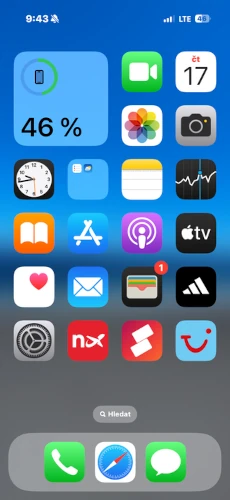
The screenshot source: Wikipedia; License: Creative Commons Attribution-ShareAlike 4.0 International.


This os is on line?
this os is not die…